Sleepwear, fabric & fit
How Coyuchi Sleepwear Uses Silhouette for Comfort and Coverage
At bedtime, comfort is shaped by more than softness. A garment’s outline determines how it moves with the body, where it leaves skin uncovered, and how much fabric rests against the sleeper. Coyuchi sleepwear offers two contrasting approaches: the open, adjustable shape of a cotton night dress and the enveloping coverage of a long-sleeve pajama set.
As evening settles, the small details of clothing become more noticeable. A strap can press against a shoulder; a waistband can shift when someone turns; sleeves can feel welcome in a cool room or too warm beneath a blanket. Sleepwear is close to the body for hours, so its silhouette—the overall shape created by length, width, seams, and openings—has a practical role as well as a visual one.
There is no single ideal nightwear shape. Some people prefer the lightness of a sleeveless dress, while others feel more at ease in a top and trousers with long sleeves. Temperature, skin sensitivity, movement, personal preference, and the feel of the fabric all influence the decision. Looking closely at these elements makes it easier to choose sleepwear that suits a particular routine rather than relying on appearance alone.
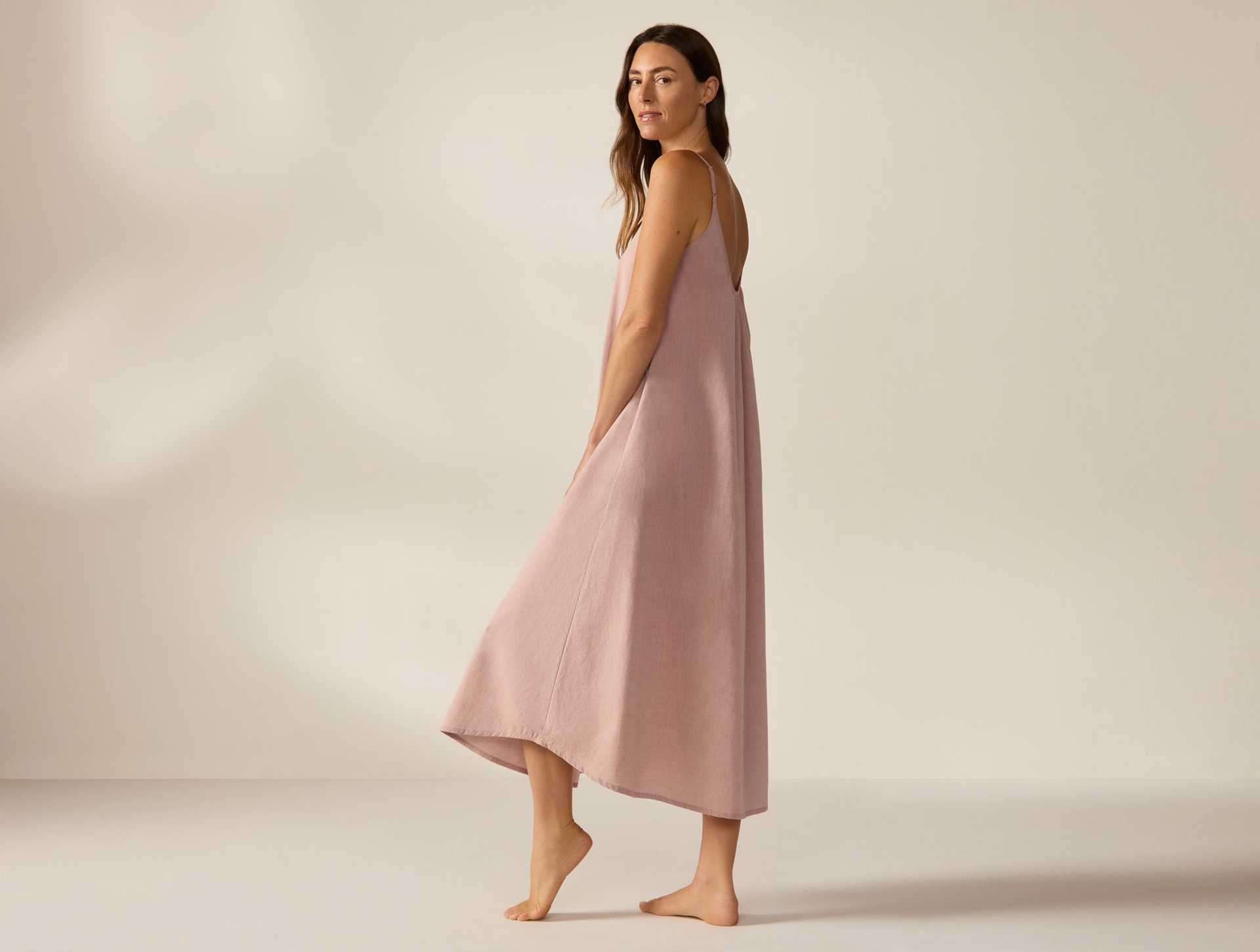
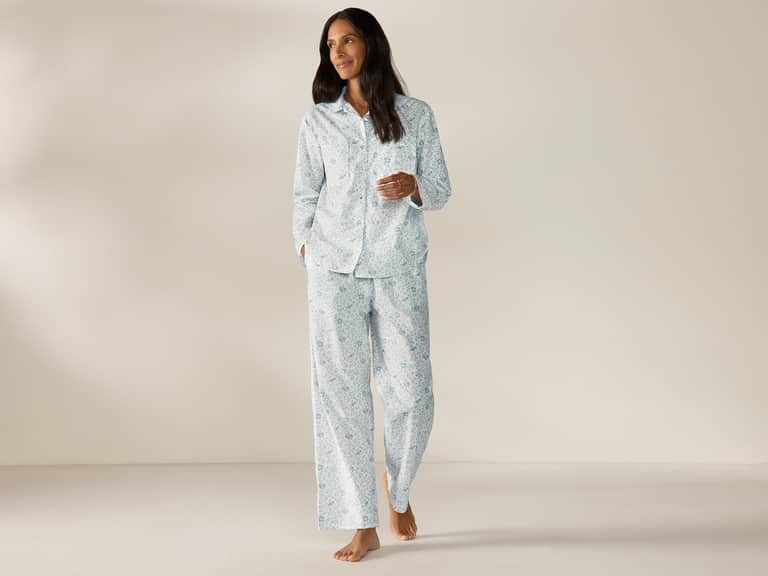
Coyuchi’s styles provide a useful comparison. The Women’s Isla Organic Cotton Night Dress uses a relaxed A-line shape and adjustable straps, while the Women’s Isla Organic Cotton Long Sleeve Pajama Set pairs a long-sleeve top with matching pants and an elastic waistband. Both are made from organic cotton, but their different shapes offer distinct choices in coverage and ease.
Silhouette is a question of movement
When a person lies down, sits up, rolls to one side, or reaches for a bedside table, fabric moves too. A close-fitting garment may stay near the body, while a relaxed cut leaves more room between cloth and skin. Neither approach is automatically more comfortable. The useful question is whether the garment’s shape allows movement without pulling, bunching, or feeling restrictive.
A night dress has fewer pieces and seams than a two-piece set. Its fabric hangs from the shoulders and falls over the torso, with the skirt providing varying amounts of room depending on its cut and length. An A-line silhouette widens gradually from the upper body, creating a shape that is not closely fitted through the hips. That ease can make it simpler to change positions without the garment feeling snug around the legs.
A pajama set divides the body into a top and trousers. This can create a more familiar, structured feeling, with separate pieces covering the torso and legs. A waistband helps keep the pants in place, while the top’s hem and sleeves provide coverage around the middle and arms. For some sleepers, this division feels secure and practical; for others, the presence of a waistband or additional fabric may feel like more than they want at night.
Fit is personal, and a garment’s listed size cannot tell the whole story. The amount of ease, the cut of the shoulders, strap adjustment, torso length, and waistband construction all affect how a silhouette feels in use. Consider not only how the garment fits while standing, but how it behaves while sitting, stretching, and lying down.
Sleeveless night dresses: open shoulders, adjustable fit
The Isla night dress is made from 100% certified organic cotton percale. Its design includes adjustable straps, natural shell buttons, and a shirttail hem. Together, these details create a relatively open upper silhouette, with the shoulders and arms uncovered and the garment’s body falling in a relaxed line.
Adjustable straps matter because shoulder position varies from person to person. A small change in strap length can influence where the neckline sits and how securely the dress rests on the body. An adjustable feature does not make every fit problem disappear, but it allows some tailoring without altering the garment. If straps tend to slip or feel tight, adjustment can be an important part of evaluating a night dress.
The sleeveless shape may appeal to people who prefer less fabric around their arms or who tend to feel warm at night. It can also be a comfortable option in a warm bedroom or during seasons when heavy layers feel unnecessary. But sleeveless does not mean universally cooler: room temperature, bedding, ventilation, and the wearer’s own comfort all play a part. Someone who feels chilled around the shoulders may prefer sleeves, even when the fabric itself is lightweight.
A shirttail hem gives the lower edge a gently curved, shirt-inspired finish rather than a perfectly straight line. Hem shape can affect how a garment settles over the body and how it looks when worn around the home. Natural shell buttons add a closure detail to the design; for bedtime comfort, button placement and any contact with the skin are worth considering along with appearance.
For those drawn to a one-piece garment with a relaxed outline, the Isla Organic Cotton Night Dress brings together breathable cotton percale and adjustable shoulder straps. Its silhouette offers an alternative to separate tops and bottoms, with a simpler arrangement of fabric and fewer pieces to adjust before sleep.
Long-sleeve pajama sets: coverage in two pieces
The Women’s Isla Organic Cotton Long Sleeve Pajama Set takes a different approach. Its long-sleeve top and matching pants cover more of the arms and legs than a sleeveless night dress. The top has two breast pockets and an inside contrast-fabric detail at the back neck yoke; the pants have two front pockets and an elastic waistband.
Long sleeves can feel reassuring in a cool room, during colder months, or for anyone who likes fabric over the arms. They also create another surface that may shift or gather as the wearer moves. Sleeve length, cuff shape, and the roominess of the arm all contribute to comfort. A sleeve that is too narrow may restrict movement, while an overly long sleeve may feel cumbersome. The set’s overall fit, not simply its coverage, determines whether it suits a particular sleeper.
Separate pants offer a different kind of coverage from a dress. They cover each leg individually and stay in place through the waistband, which may feel practical for moving around before bed or after waking. An elastic waistband can accommodate movement and make a garment easier to pull on, though the pressure it creates is personal: some people value a secure hold, while others prefer the more open feel of a one-piece night dress.
Pockets are a functional addition, even in sleepwear. They may be useful for carrying a small item around the home, although they are not essential for sleeping itself. What matters is whether the pocket placement and fabric add bulk or interfere with the way the garment rests. The pajama set’s pockets and two-piece construction give it a more everyday-clothing quality, while its cotton fabric and relaxed purpose keep it within the world of nightwear.
The Isla Long Sleeve Pajama Set is described as garment-washed organic cotton poplin, with a breathable feel and a finish intended to soften over time. Its long sleeves, matching pants, and elastic waistband make it an option for people who want coordinated coverage rather than the open shape of a night dress.
Fabric changes how a shape feels
Silhouette and fabric are inseparable. A roomy garment made from a crisp, stiff cloth may behave differently from one made in a softer fabric, even if the pattern is nearly the same. Fiber, weave, weight, finish, and laundering all affect how cloth drapes, breathes, and moves against the body.
The Isla night dress is made from organic cotton percale, while the pajama set uses organic cotton poplin. Both are cotton fabrics, but the terms refer to different woven constructions. A fabric’s name alone does not guarantee a particular sensation: weight, finishing, and individual preference matter. The most helpful evidence is a garment’s material information, care guidance, and how its construction matches the wearer’s priorities.
Cotton is often chosen for its familiar feel and everyday practicality. In sleepwear, fabric that feels comfortable against the skin can help make a garment easy to reach for night after night. Breathability is also relevant, especially for sleepers who dislike a heavy or clingy sensation. Still, comfort cannot be reduced to a fiber label. A person who feels cold may prefer the added coverage of a long-sleeve set, while someone who overheats may favour an open shoulder and a simpler silhouette.
The term “organic cotton” describes the fiber’s agricultural sourcing and certification context; it does not, by itself, determine whether a garment will be comfortable for every individual. Details such as fabric surface, seams, fit, and sensitivity to particular finishes or textures remain important. Readers who are sensitive to tags, stitching, or pressure points may want to inspect garment construction and care information closely.
Fabric also responds to washing. Following the garment’s care label helps preserve its shape and surface over time. The Isla night dress is listed for cold, gentle washing and low-temperature tumble drying; the pajama set’s care instructions similarly call for a gentle cold wash and low drying heat. Care labels are the best guide for the specific garment, since heat and rough handling can affect cotton fabric and construction.
Coverage is personal, not a measure of comfort
Coverage can mean different things: warmth around the shoulders, a preference for covered legs, a desire for modesty when sharing a home, or simply the familiar feeling of wearing a full set. These needs can change from one person to another and from one night to the next. Sleepwear should not be judged by how much skin it covers, but by whether its shape feels appropriate to the wearer and setting.
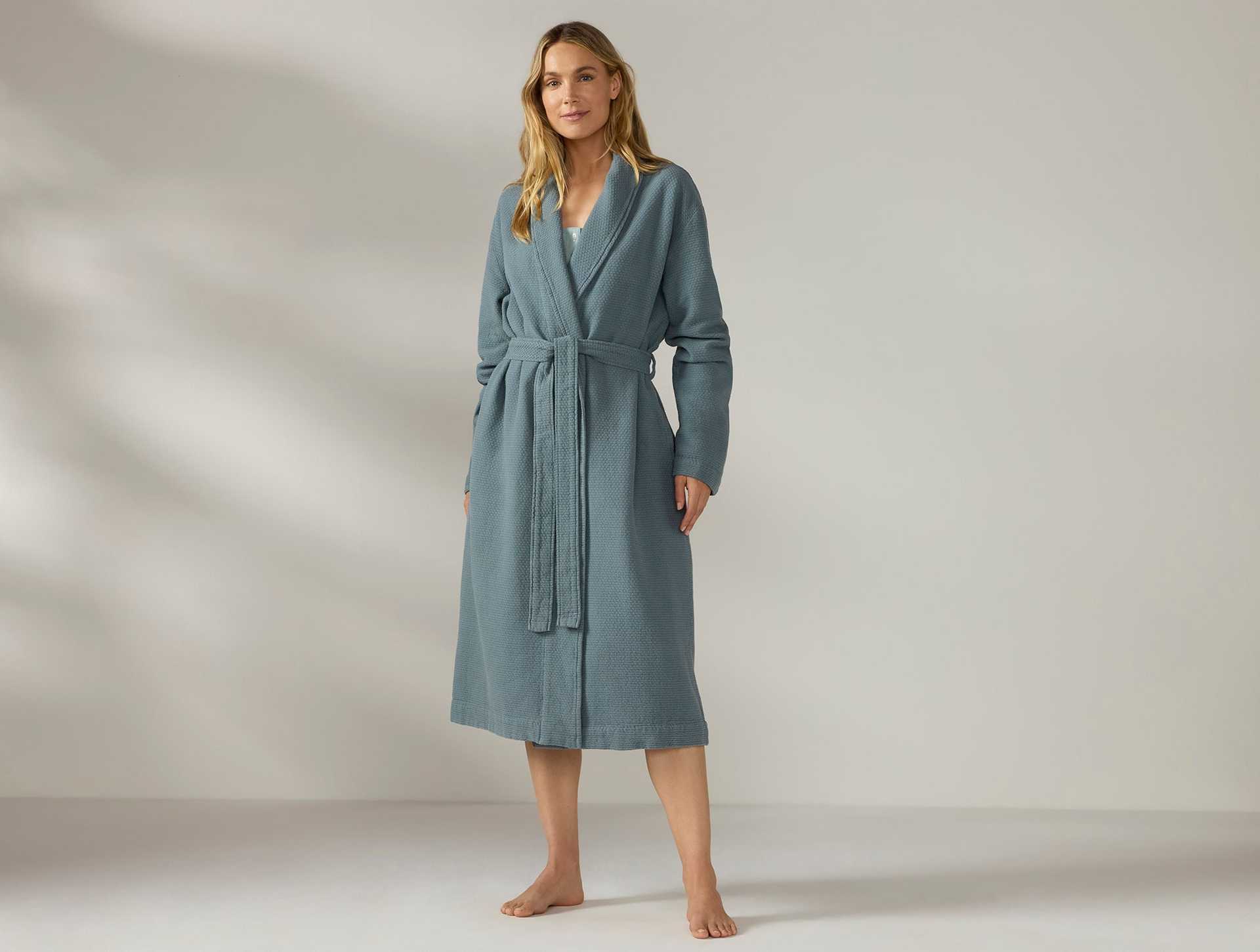
A sleeveless dress leaves the arms and shoulders exposed, which may feel liberating in warm conditions or uncomfortable when the room is cool. A long-sleeve pajama set offers more fabric across the limbs, but its extra coverage may feel unnecessary under thick bedding. A robe can add a layer for the walk from bedroom to bathroom without requiring a person to sleep in heavier clothing. For example, the Women’s Adriatic Organic Robe is made from organic cotton in a lightweight, relaxed weave and includes a waist belt and on-seam pockets. It is a separate layering piece, not a substitute for choosing a comfortable sleepwear silhouette.
For shared bedrooms, guests, or households where people move between private and common areas, coverage outside the bed may be a practical consideration. A pajama set may feel suitable for lingering over breakfast, while a night dress might be paired with a robe when more coverage is wanted. These are matters of routine rather than rules; what feels convenient depends on the person and household.
A useful way to choose between nightwear silhouettes
Instead of asking which style is best, start with the conditions in which it will be worn. Bedroom temperature, bedding, sleep habits, and the amount of movement a person makes during the night can all help guide the choice. A garment that feels pleasant while standing in a shop or at home may feel different after several hours of rest.
- Consider temperature. If arms or legs tend to feel cold, the longer coverage of a pajama set may be welcome. If layers feel too warm, a sleeveless dress may be more appealing.
- Think about movement. Notice whether fabric bunches around the waist, rides up, or pulls at the shoulders. A relaxed A-line dress and a two-piece set distribute fabric differently.
- Check adjustable details. Strap adjustment can help refine the fit of a night dress. An elastic waistband offers a different kind of flexibility in pajama pants.
- Pay attention to contact points. Waistbands, seams, buttons, and pocket edges may be more noticeable when lying down. Choose details that feel unobtrusive to you.
- Match the garment to your routine. Some people want sleepwear only for bed; others value clothing that also works for a quiet morning at home.
- Read the care information. Choose a washing routine you can maintain and follow the instructions provided for the particular garment.
These questions are especially useful when comparing cotton night dresses and pajama sets, because they shift attention away from labels or trends and toward the wearer’s experience. Fit, comfort, and coverage are individual; the best choice is the one that feels right in the conditions where it will be used.
Two shapes, different routes to ease
Sleepwear silhouette is a quiet form of design engineering. A strap adjusts to a shoulder; a sleeve covers an arm; an elastic waistband holds a trouser in place; a relaxed cut leaves room to move. These elements are not dramatic, but they shape the small bodily experiences that accumulate over a night.
Coyuchi’s Isla Organic Cotton Night Dress and Isla Long Sleeve Pajama Set demonstrate how distinct garments can answer different preferences without one needing to replace the other. The night dress offers an airy, sleeveless outline with adjustable straps and a shirttail hem. The pajama set offers long sleeves, separate trousers, pockets, and an elastic waist. Their shared use of organic cotton does not erase the difference between their structures; it gives each a fabric foundation for its own form.
For a warmer room or a preference for fewer layers, a night dress may feel like the natural choice. For a cool bedroom, a desire for covered limbs, or the familiarity of a top and pants, long-sleeve pajamas may suit better. Some people may keep both styles in rotation, choosing according to season, room conditions, or mood. What matters is not adopting one ideal version of nightwear, but noticing how the garment interacts with the body.
In the end, comfort is a balance of shape, fabric, and personal habit. A good sleepwear silhouette does not call attention to itself: it allows room to rest, move, and settle into the changing temperature of the night. The right choice is the one that supports those ordinary, essential freedoms.
Frequently asked questions
What is the difference between a night dress and a pajama set?
A night dress is a one-piece garment, usually hanging from the shoulders, while a pajama set combines a top and pants. A dress can offer a simple, open silhouette; a set provides separate coverage for the torso and legs. Which feels more comfortable depends on fit, temperature, and personal preference.
Are sleeveless night dresses better for warm weather?
They may suit people who want less fabric around the arms and shoulders, but temperature comfort depends on the bedroom, bedding, and individual needs. A sleeveless style is not automatically the right choice for every warm-weather sleeper.
Why do adjustable straps matter in sleepwear?
Adjustable straps allow the wearer to change their length, which can help position a dress more comfortably on the shoulders and upper body. They offer a degree of fit adjustment without changing the garment’s overall silhouette.
How should cotton sleepwear be cared for?
Follow the care label for the specific garment. The Isla styles are listed for gentle washing in cold water and low-heat drying, but instructions can vary. Gentle handling helps maintain the fabric and garment construction through repeated laundering.