Introduction: Why Jersey Shapes a Dress
Jersey, a knit fabric known for its inherent stretch and soft hand, invites a different approach to dressmaking. Unlike woven fabrics, jersey behaves like a living partner in the sewing process—dragging just enough on grain lines, forgiving in drape, and forgiving of imperfect seam finishes if treated with care. The choice of jersey lays the foundation for fit, comfort, and wearability in a knit dress that moves with you through daily life.
In this guide, we translate fabric science into practical steps. We’ll examine fabric weight, stretch percentage, recovery, and recovery behavior after washing. We’ll also consider fiber content, fiber blends, and how different brands interpret jersey in their product lines, from Coyuchi’s natural-textured options to Gingerlily’s luxury silks when they appear in knit-adjacent forms. The aim is to empower beginners to pick a jersey that yields a flattering silhouette, holds its shape, and stands up to routine wear and care.
Section 1: Reading Jersey Specs — Weight, Stretch, and Recovery
Understanding jersey begins with three core specifications: weight, stretch, and recovery. Weight is measured in grams per square meter (GSM) or ounces per square yard (oz/yd²). Heavier jerseys (200–260 GSM) feel more substantial and hold shape better, which can be beneficial for a dress with a defined silhouette. Lighter jerseys (120–180 GSM) yield a softer, drapier look that skims the body and is forgiving for beginners learning to cut without precision tape.
Stretch is typically described as a percentage, reflecting how much the fabric can stretch in a given direction. Common jersey stretch ranges include 20–40% across the width. A higher stretch can ease fit around the bust and hips, but it can also grow under a full day of wear if not stabilized. Recovery refers to how well the fabric returns to its original dimensions after being stretched. Jersey with poor recovery may visibly grow at the shoulders or waistline after a few wears, producing a baggy silhouette.
When selecting jersey from brands such as Coyuchi and Gingerlily, beginners should focus on a moderate weight (150–190 GSM) with ample recovery. A typical recommendation is a cotton- or viscose-blend jersey with 20–30% spandex or elastane for stabilizing recovery without creating a stiff feel. This balance sustains a clean line in your dress while remaining comfortable to wear for long periods.
Section 2: Home Tests for Draping and Stability
Before committing fabric to a pattern, you can perform several quick home tests to gauge a jersey’s behavior. Start with the hand test: fold a small swatch and stretch across the grain. Observe whether the fabric returns to its original shape quickly or remains stretched. A smooth, even rebound signals good recovery. Next, test the drape by pinning a swatch and letting it hang. A fabric that drapes smoothly without sagging will convey how your finished dress will flow against your body.
Wash the swatch according to the fabric’s care instructions, then reassess. If the swatch thickens or stiffens after washing, you’ll know to adjust your sewing approach for that fabric. These steps help you build intuition about how a jersey will perform in a full-scale project, reducing the risk of fashion drama on your first knit-dress endeavor.
Section 3: Choosing a Jersey for Your Knit Dress
Brand choice matters for beginners—look for blends that balance hand feel with stability. Coyuchi provides textiles with an emphasis on natural fibers and gentle dye processes, offering jersey options that align with a mindful, sustainable approach to dressmaking. Gingerlily, known for its luxury sensibility, presents silk- or silk-blend options that demonstrate how knit garments can be elevated while still delivering the comfort knitwear promises. For a beginner seeking practical, washable comfort, Cotton- or modal-blend jerseys are excellent stepping stones into knit-dress construction.
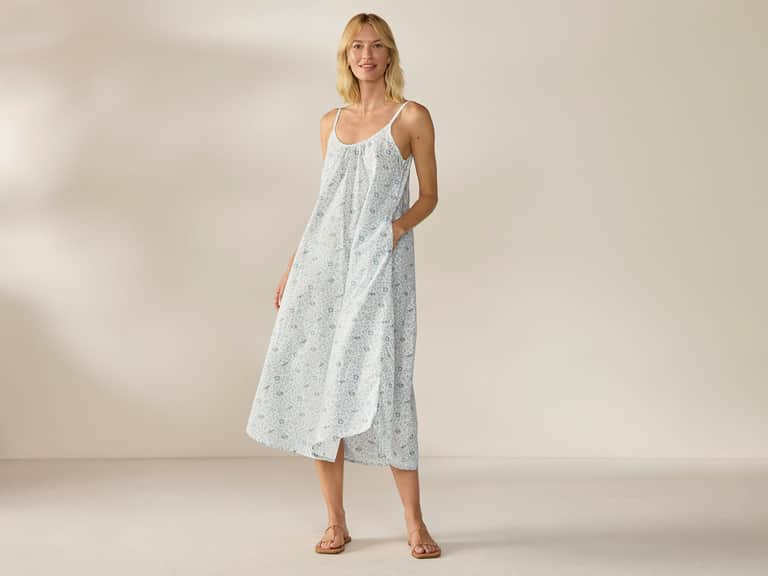
To bring this concept to life, consider a practical example: the Isla Organic Cotton Night Dress from Coyuchi, though not a jersey garment, serves as a high-watermark for fabric integrity and finish. The Isla dress demonstrates how good fabric handling and thoughtful construction yield a relaxed silhouette that remains breathable and comfortable. While the Isla dress uses a crisp poplin, the design philosophy—clarity of seams, easy care, and a forgiving silhouette—can guide your jersey dress project. When you translate those principles to jersey, you’ll aim for clean finishing, stable necklines, and well-supported hems that won’t roll or stretch out of shape.
Section 4: Practical Step-by-Step — Sewing a Stretchy Jersey Dress
This section outlines a beginner-friendly workflow for sewing a stretch jersey dress. The steps emphasize careful cutting, stabilizing critical seams, and choosing appropriate finishing techniques to accommodate knit fabrics.
- Choose a jersey with moderate weight (130–190 GSM) and stable recovery. If possible, pick a cotton- or cotton-blend jersey to minimize curling and keep seams stable.
- Select a simple pattern with a clean, linear silhouette, such as a T-shirt dress or a shift dress. Avoid heavy gathers or complicated necklines in your first project.
- Prewash the fabric according to care instructions, then lay out your pattern with a generous hold on grain. Use a rotary cutter or sharp scissors for clean edges, and consider a walking foot if your machine has one to reduce shifting during sewing.
- Use a stretch stitch or a narrow zigzag to accommodate fabric elasticity. A twin needle can help with necklines, hems, and topstitching for clean edges, but start with a simple zigzag stitch to learn the fabric’s response.
- Finish seams with a zigzag or an overlock/serger if you have access to one. Stabilize necklines and armholes with lightweight stay tape or a narrow strip of the same fabric to prevent stretching.
- Hems should either be a narrow self-fabric hem or a small machine-blind hem to avoid bulky finishes. For knits, avoid a traditional folded hem that can shift and roll; a clean, narrow hem or a coverstitch finish (if available) is ideal.
- Press with a low-heat setting and use a pressing cloth to protect the fabric. Avoid high heat that can degrade elastane and fiber integrity.
Section 5: A Practical Mini-Guide: Jersey Choices for a Beginner Knit Dress
For a starter project, consider a dress made from a medium-weight cotton jersey with modest stretch. A reliable option might be a cross-dyed or solid color jersey with about 20–30% spandex. This choice gives you a little extra hold so you don’t have to fight the fabric to maintain a flattering silhouette during wear. If you crave a luxe touch, experiment with a silk-jersey blend—the drape is sumptuous, and the hand-feel is refined, but be mindful of care and stretch stability in silk-rich knits.
Throughout your journey, keep a few guidelines in mind: aim for fabrics with good recovery, avoid overly slippery knits that shift on grain, and always test a swatch before committing to a full dress. Your pattern layout should consider knit recovery direction, especially around the bust and waist where the fabric may be pulled taut during wear. The goal is not to force stitches into place but to let the fabric’s natural drape and elasticity guide your design choices.
Section 6: Aesthetic and Design Considerations
While performance is fundamental, the aesthetic of a knit dress remains central. Jersey dresses are forgiving and versatile, lending themselves to body-positive styling, seasonal layering, and easy-care maintenance. The silhouette you select will influence your fabric choice: a bodice with minimal shaping benefits from a midweight jersey, while a more dramatic drape or bias-cut design invites a lighter hand.
Consider a dress that emphasizes clean lines, a simple neckline, and a forgiving hem. Accessorize with a belt to define the waist on a looser silhouette, or pair with a cardigan for transitional weather. In design terms, jersey invites a modern, adaptive wardrobe—one that marries comfort with a sense of quiet, everyday elegance.
Key Individuals Across Time Periods
From historical innovators to contemporary craft advocates, three figures illuminate the enduring relationship between fabric, dress, and the human form. Each offers a distinct lens on jersey, knitwear, and garment construction.
- Jean-Baptiste-Felix Sabatier (18th–19th centuries): A pioneer in textile machinery who contributed to the mechanization of knit production, Sabatier’s innovations increased the accessibility of jersey-like fabrics. His work framed how knit textiles could be produced at scale, democratizing comfortable, form-fitting garments. His legacy sits at the intersection of textile engineering and practical dress, reminding us that a successful knit dress rests on robust production technique as much as on design sensibility.
- Christina de la Mare (20th century): A designer who championed comfortable silhouettes inspired by everyday wear, de la Mare’s work in the mid-century era emphasized practical patterns and easy-care fabrics. Her approach to knit dresses—simple shapes with refined finishing—laid groundwork for modern jersey dressmaking as a mainstream practice. She cultivated a philosophy of inclusivity and accessibility, encouraging home sewers to experiment with stretch fabrics without fear.
- Current era craft advocates and industry voices (late 20th–21st centuries): Contemporary designers and educators—thinkers who bridge textile science and pattern drafting—continue to demystify jersey. They emphasize fabric testing, pattern manipulation for stretch, and sustainable choices in fiber blends. Their work, including tutorials and community-led workshops, helps novices translate technical knowledge into practical projects, much like the educational hub envisioned for Jersey Dress as Direction A.
Conclusion: Turning Knowledge into Practice
Choosing the right jersey for a knit dress begins with curiosity about fabric behavior and a disciplined approach to testing, cutting, and finishing. By centering education—weight, stretch, recovery, and care—you can craft a dress that feels as good as it looks, season after season. The Isla Organic Cotton Night Dress, while not a knit, stands as a beacon for thoughtful design, quality sourcing, and timeless silhouettes. Let its spirit inform your jersey journey: clarity of purpose, respect for fabric, and a commitment to wearability that invites you to sew again and again.