What Makes a Knit Sleep Gown Different from Woven Nightwear?
At bedtime, fabric construction can matter as much as fiber content. Knit sleepwear is built from interlocking loops; woven nightwear is made by crossing threads. That structural difference shapes how a gown stretches, drapes, breathes, and responds to care—so “cotton” alone does not tell the whole story.
Two ways to build a cloth
Look closely at a piece of fabric and you may see a quiet architecture. In a knit, yarn forms a succession of loops connected to one another. In a woven cloth, two sets of yarn cross at right angles: lengthwise threads, called the warp, intersect with crosswise threads, called the weft. These are different methods of making fabric, not different names for particular fibers. Cotton, for example, can be knitted or woven.
The distinction is easy to feel once you know what to notice. A jersey knit often yields when gently pulled, then returns toward its original shape. A plain-weave cotton is more likely to feel stable and crisp, with little give unless it contains elastic fibers or has been cut and finished to create stretch. Not every knit is soft and stretchy, and not every woven is stiff. Yarn, gauge, weave, finishing, and fabric weight all influence the result.
For sleepwear, those small structural differences become part of the night’s experience. Fabric moves with the body through a change of sleeping positions, gathers beneath an arm, falls across a shoulder, and meets the skin for hours. A gown that feels comfortable while standing may behave differently when you turn, stretch, or curl beneath a blanket.
How knit sleepwear moves
The loops in knitted fabric can flex and shift, giving many knits useful stretch without added elastane. Jersey—the familiar knit associated with T-shirts—is made with a knitted structure that generally has more crosswise give than a comparable woven cloth. Rib knits, with their raised vertical channels, can stretch substantially in more than one direction. Interlock knits tend to have a smoother, more stable face and can feel denser than a lightweight single jersey.
That flexibility can make a knit sleep gown feel accommodating during movement. It may follow the body rather than hold a set shape, which can be welcome for people who dislike restrictive nightwear or who change positions often. A knit garment may also settle close to the body and recover after being stretched—though recovery depends on the knit, fiber, yarn, and care. A loose knit or one with poor recovery can bag at elbows, knees, or the seat over time.
Drape varies widely. A fine, fluid jersey can fall softly and skim the body, while a heavier knit may hang with more substance. The familiar T-shirt softness of some cotton knits is not universal: a compact, firm knit can feel quite different from a light, brushed one. Labels such as “jersey” or “knit” describe a construction family, not a guarantee of a particular hand-feel.
Stretch can also affect fit. A pattern designed for a woven fabric usually assumes little or no stretch; making it in a knit without adjusting the pattern may produce a garment that is too loose or whose seams behave unpredictably. Conversely, a fitted knit pattern may rely on stretch to move comfortably. When sewing or buying a sleep gown, the intended fabric and the garment’s design should be considered together.
The steadier character of woven cotton
Woven cotton nightwear often offers a different sensation: a more stable surface, a clear silhouette, and a little structure as the garment moves. Plain-weave fabrics such as poplin or percale are made from intersecting yarns and typically have limited natural stretch. They may feel cool and crisp at first, then soften with repeated washing and wear. The effect depends on the yarn, weave density, finishing, and fabric weight.
A woven gown can skim the body rather than cling to it. Its shape may remain more defined, and details such as a shirttail hem, buttons, pockets, or an A-line silhouette can retain their intended outline. This steadiness can be useful for sleepwear that doubles as relaxed loungewear, especially when someone prefers a garment with room to move but not the close fit of a stretch knit.
Less stretch does not automatically mean less comfort. A relaxed cut can provide ample ease, and a breathable cotton woven may feel airy against the skin. The key is the relationship between the fabric and the pattern. A generous silhouette, adjustable straps, or carefully placed seams can make a woven gown comfortable without relying on fabric stretch.
Woven fabric can crease more visibly than many knits, although this too depends on fiber and finish. Cotton poplin may develop soft creases during sleep; that is a normal consequence of the fabric’s structure and use, not a sign that it has failed. If a crisp appearance matters, gentle ironing may restore a neater finish. For nightwear, many people simply value how the cloth feels and wears over whether it looks freshly pressed.
Cotton is a fiber, not a construction
One common source of confusion is treating “cotton” and “knit” as competing fabric types. Cotton identifies the fiber. Knit and woven identify the way yarns are arranged. A cotton jersey is knitted; cotton poplin and cotton percale are woven. Each can have distinct weight, texture, breathability, and care needs.
Breathability is similarly more complex than a simple knit-versus-woven rule. Air and moisture move through fabric according to its fiber, yarn, construction, thickness, and finish. A lightweight cotton woven may feel airy, while a dense knit may feel warmer. A fine knit can be breathable, too. The best comparison is between the actual fabrics in question, rather than assuming that every knit or every woven behaves alike.
Fiber content influences the experience as well. Cotton absorbs moisture and is familiar against the skin, while blends may add stretch, resilience, or faster drying. Modal and other regenerated cellulosic fibers are used in soft, fluid knits, but the label and fabric construction still matter. For people sensitive to warmth, texture, or particular finishes, checking the garment’s fiber content and trying it on—when possible—can be more useful than relying on a broad fabric category.
Weight is another useful clue. A light fabric can feel less substantial and may be appropriate for warm rooms; a heavier fabric can provide more coverage and warmth. Weight does not predict comfort on its own, since a loose cut, open neckline, sleeve length, and bedding all affect how warm a gown feels during the night.
A woven example: Coyuchi’s Isla night dress
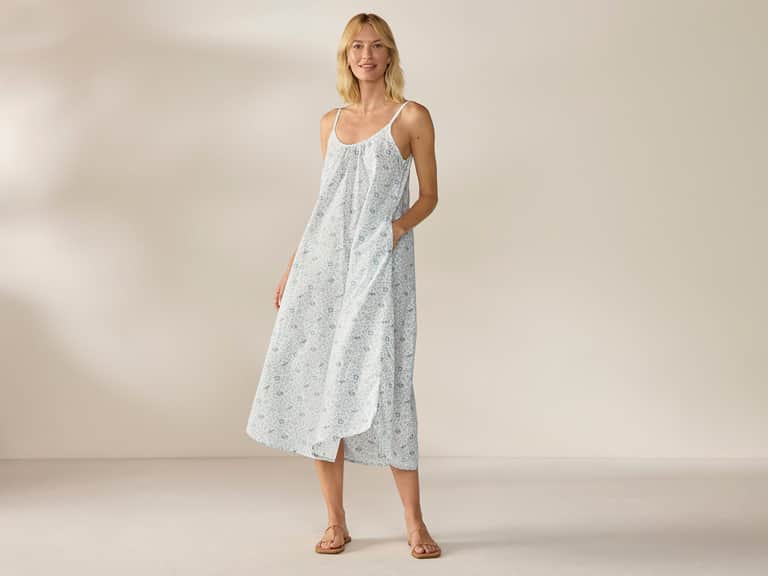
The Women’s Isla Organic Cotton Night Dress offers a useful point of comparison because its fabric is specified as 100% certified organic cotton poplin—not jersey knit. Its relaxed A-line shape, calf-length hem, low open back, and adjustable straps create ease through cut and construction rather than through a stretch-knit body. Natural shell buttons and hidden seam pockets add functional details while keeping the silhouette simple.
Poplin is a woven fabric, so the gown is a practical illustration of how woven nightwear can prioritize airflow and a relaxed fit without being a knit. The dress is described as made from cotton grown and woven in India, and it carries GOTS certification; the product information also states that it is made in a Fair Trade Certified factory. Those sourcing details are separate from the knit-versus-woven distinction, but they may matter to people evaluating how a garment is produced.
The stated care instructions are to machine wash cold on a gentle cycle with like colors and tumble dry on low. Following the garment’s own care label is important: broad assumptions about cotton care may not account for its particular construction, color, or finishing. Washing gently and avoiding excessive heat can help preserve the feel and shape of many cotton garments.
Its design also shows why stretch is only one route to comfort. Adjustable straps can help personalize the fit at the shoulders, while an A-line silhouette leaves room through the body. If you prefer fabric that moves with you, a knit may suit your habits better. If you like a more stable, airy feel and a gown that hangs away from the body, a relaxed woven style may be a good alternative.
Drape, fit, and the night’s movement
Imagine rolling from one side to the other. A stretch knit may extend across the shoulder or hip and then settle back, reducing the sense that the garment is resisting movement. A woven gown generally does not stretch in the same way. Instead, its ease—the extra room built into the pattern—allows the body to move inside the garment. Both approaches can work well; comfort depends on how much room the pattern provides and where the fabric needs to move.
Consider also how the fabric behaves when it meets bedding. A smooth knit may glide easily under a sheet, while a brushed or textured knit may feel softer but create more friction. A woven cotton may feel crisp against the skin and can rustle slightly as it shifts. These impressions are personal, and there is no universal winner. Someone who enjoys a close, flexible feel may gravitate toward jersey; someone who prefers a light, more structured drape may choose woven cotton.
Necklines, sleeves, and hems can matter just as much as the fabric. A narrow neckline or tight armhole can feel restrictive even in a stretchy knit. A woven gown with generous armholes may be easier to wear than a poorly fitted knit. Length changes how fabric gathers around the legs, while straps and closures influence whether the garment stays in place. Looking at the whole design gives a fuller picture than reading the fiber label alone.
Care and shape over time
Knit and woven garments may respond differently to wear and laundering, but neither construction is automatically more durable. A knit can snag or develop surface pilling depending on yarn and finish. It may also stretch out if repeatedly pulled or dried with too much heat. A woven can fray at an unfinished edge, crease, or become softer with washing. Seam construction, fabric quality, and care all play a part in longevity.
Follow the care instructions supplied with the garment rather than choosing a wash routine solely from the word “cotton.” A gentle cycle can reduce abrasion, while washing similar colors together helps limit dye transfer. High heat may shrink some cotton fabrics or affect shape and finish; the appropriate drying method is garment-specific. If a knit feels stretched after washing, reshape it gently and dry it as instructed. Avoid hanging a heavy, wet knit by narrow straps, which can place unnecessary strain on those areas.
For woven nightwear, removing the garment promptly from the dryer can reduce hard creasing. A cool or warm iron may be suitable if the care label allows it. With either construction, treating small issues early—such as a loose button or a seam beginning to open—can help extend useful wear.
Care labels also provide a straightforward way to compare options before purchase. Look for washing temperature, drying instructions, ironing guidance, and any restrictions. If a garment requires more attention than you are likely to give it, that practical mismatch may matter more than a small difference in softness.
How to choose between knit and woven nightwear
Start with the sensation you want. If you like flexibility, a soft close-to-body feel, and fabric that can stretch as you move, explore knit sleepwear such as cotton jersey. Check whether it contains elastane and consider how much recovery the fabric offers. A knit that feels comfortable in a fitting room should still have enough room at the shoulders, bust, and hips for unrestricted movement.
If you prefer a light, more stable cloth with a defined shape, consider woven cotton nightwear. Look for a relaxed cut, comfortable armholes, and enough ease to sit, reach, and turn without pulling at the seams. Poplin and percale can feel crisp and breathable, though their particular hand-feel will vary by weight and finish.
Think about your sleeping environment, too. Room temperature, bedding, personal warmth, and whether you wear sleepwear alone or under a robe all affect comfort. A long-sleeved knit gown might feel warm in one bedroom and perfectly comfortable in another. A lightweight woven can feel cool, but a close cut or dense fabric may change that impression.
- For flexible movement: look for a knit with suitable stretch and a cut that does not cling more than you prefer.
- For a crisp, stable feel: consider woven cotton and a generous silhouette with practical ease.
- For easier comparison: check fiber content, fabric name, garment measurements, and care instructions together.
- For lasting wear: prioritize sound seams, comfortable construction, and a wash routine you can realistically follow.
When shopping online, product descriptions and close-up fabric details can help, but a fabric label may not describe softness or drape completely. Measurements are especially useful: compare them with a gown you already find comfortable, allowing for the fact that a knit and woven of similar dimensions may feel different in use.
A small fabric glossary
Jersey: a common knit construction often used for T-shirts and sleepwear. It generally has some stretch, though the amount depends on the fiber and fabric structure.
Rib knit: a knit with alternating raised ribs and channels. It can stretch readily and is often used for cuffs, necklines, or garments designed to fit close to the body.
Poplin: a woven fabric with a fine, closely set structure. Cotton poplin is often lightweight and smooth, with more stability and less natural stretch than jersey.
Percale: a plain-weave cotton fabric commonly described as crisp and matte. Its feel changes with yarn, weave density, finishing, and laundering.
Recovery: the ability of a stretched fabric to return toward its original dimensions. It is particularly relevant to knits, but varies widely among them.
Drape: the way fabric falls and forms folds on the body. Weight, stiffness, fiber, and construction all influence it.
The better fabric is the one that suits your sleep
Knit and woven nightwear answer different preferences. Knit sleepwear’s looped construction often brings stretch and flexibility, which can make it feel easy through movement. Woven cotton nightwear is generally more stable, with a shape that comes from the cut and a character that may feel crisp, light, and airy. Yet those are tendencies, not rules: fabric weight, fiber, finishing, fit, and personal comfort all influence the final experience.
The most useful question is not simply “Which fabric is better?” but “How do I want my nightwear to feel and behave?” If you value a stretchy, T-shirt-like softness, a knit may be a natural choice. If you prefer a more structured drape and a garment that hangs away from the body, a woven gown such as the Coyuchi Isla can offer another path to comfort. Paying attention to construction, silhouette, and care turns a broad label into a more informed decision—and helps make sleepwear feel like it belongs to your own rhythms.